 ALEX FANTINIart · discipline · knowledge
Latosa® combat Escrima — teaching competence through experience and verification
Training principles of the European Latosa® Combat Escrima Academy
Estimated reading time · 4 min
In this article
Latosa Combat Escrima is a Filipino martial arts system based on simplicity of movement, the application of principles, and the ability to adapt to different combat conditions.
Passing on this technical heritage requires not only theoretical knowledge and teaching ability, but also adequate practical experience.
At the European Latosa® Combat Escrima Academy, we consider facing a non-cooperative opponent an important tool for instructor training and assessment.
The aim is not to identify the strongest fighter, but to develop competent, responsible instructors who understand the possibilities conveyed by the system.
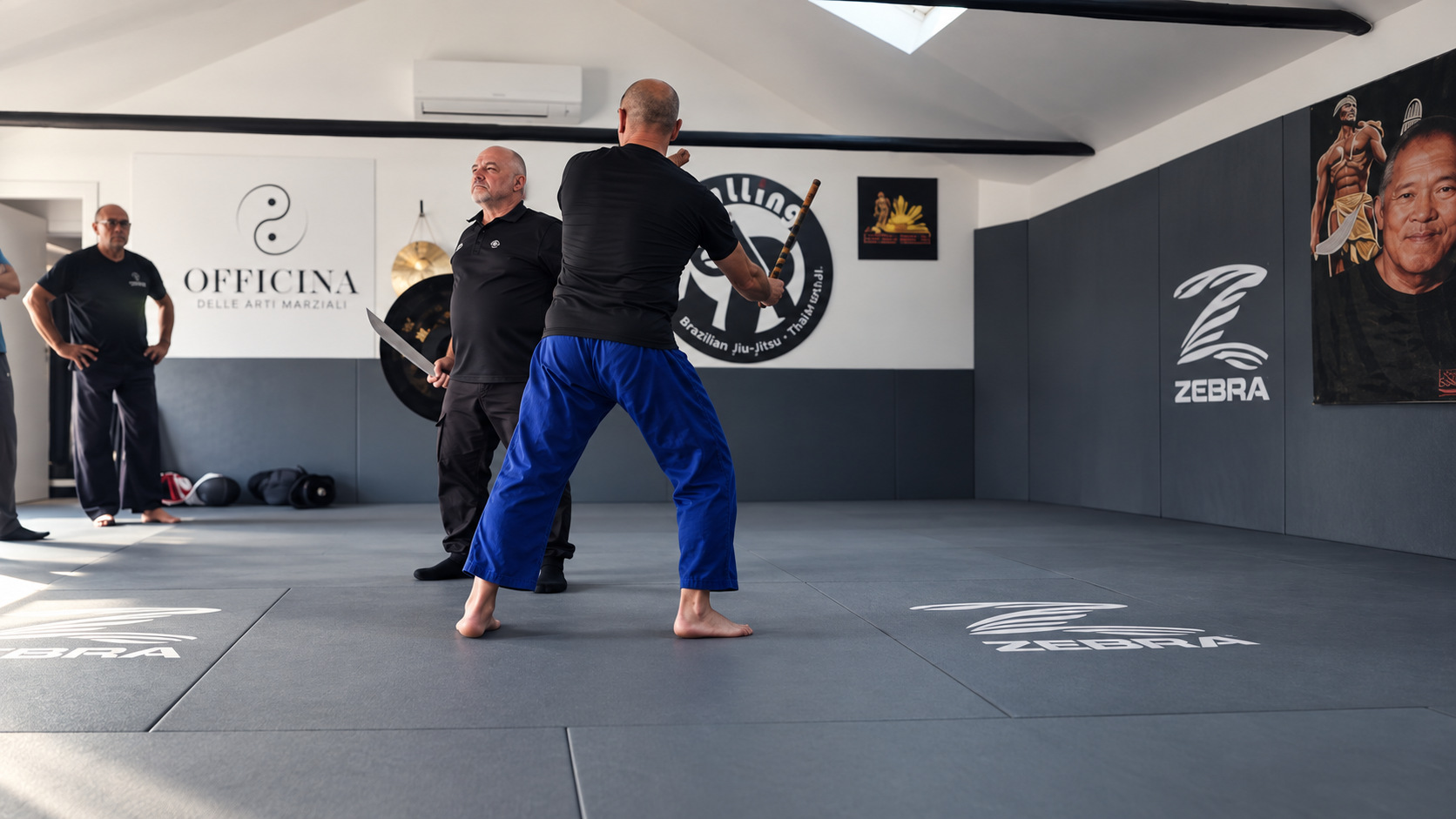
1. INSTRUCTOR ASSESSMENT CRITERIA
Before taking on teaching responsibilities, candidates undergo practical assessments scaled to their individual level of preparation.
The assessment is based on three fundamental qualities, summarized as Courage, Heart and Brain.
Courage: willingness to face confrontation, accept pressure, and respect one’s own limits and those of the opponent.
Heart: determination, discipline, consistency of commitment, and the ability to manage difficulty.
Brain: clarity, emotional control, decision-making ability, and adaptation to situations.
These qualities are accompanied by specific technical parameters: distance management, timing, balance, control of actions, reaction ability, and application of the fundamental principles of Latosa Combat Escrima.
Victory or defeat alone is not a decisive criterion. Particular attention is given to the quality of decisions and behavior demonstrated during the assessment.
2. THE ROLE OF SPARRING IN TRAINING
Sparring is a teaching tool used to verify the application of skills under progressively increasing opposition and pressure.
It must not be confused with a real assault, which is characterized by unpredictable variables and the absence of shared rules.
Experience gained through controlled confrontation can help develop abilities useful for personal defense, without guaranteeing effectiveness in every situation.
Training therefore also includes prevention, risk assessment, conflict management, and the possibility of avoiding or breaking off a confrontation.
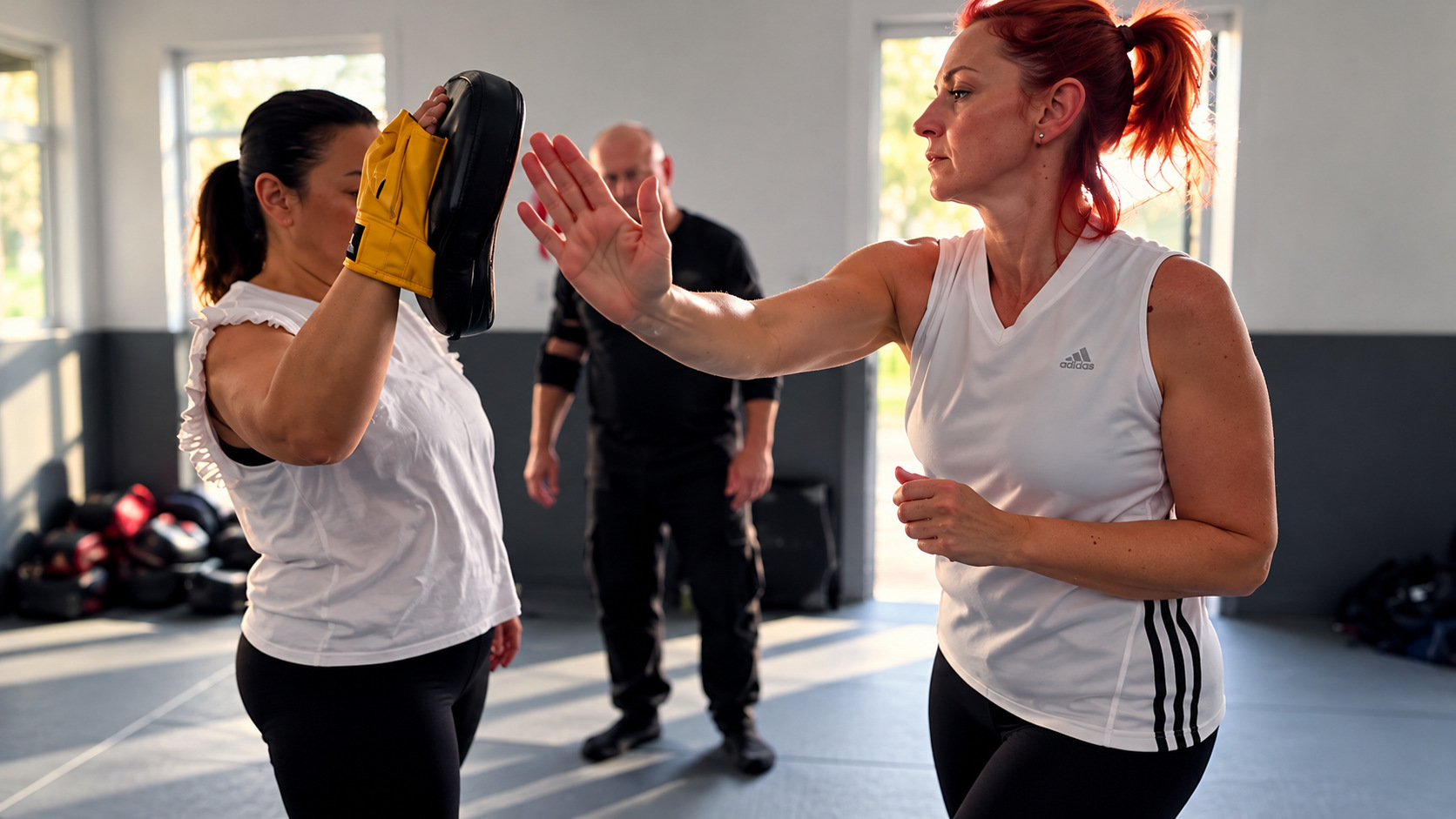
3. SAFETY PROTOCOL AND ASSESSMENT PROCEDURE
Controlled combat activities must be organized according to principles of progression, proportionality and participant protection.
Before the assessment
- Check experience, technical ability and suitability for the specific activity.
- Provide information about risks and obtain informed consent from participants.
- Check physical condition and any injuries or limitations.
- Inspect protective equipment, training simulators and the training area.
- Define rules, permitted targets, intensity and stop conditions in advance.
During the assessment
- A qualified technical supervisor must be present and dedicated exclusively to supervision.
- Use a helmet or mask, gloves and additional protection appropriate to the discipline, equipment and intensity.
- Give priority to padded or flexible simulators for contact exercises.
- Increase intensity gradually only when both participants demonstrate sufficient control.
- Stop immediately in the event of loss of control, equipment problems, injury, evident fatigue, or a request from either participant.
Exercises with rigid sticks require a specific risk assessment and must be distinguished from full-contact sparring. Gloves and head protection alone do not provide sufficient protection against violent impacts with rigid implements. These exercises require contact limits, appropriate protection and technical methods compatible with safety.
After the assessment
The technical supervisor evaluates performance, highlighting demonstrated abilities, critical points and improvement goals.
Any injuries or incidents must be recorded and managed according to the relevant procedures, with trained first-aid personnel available and access to emergency services.
The assessment may result in a finding of suitability, suitability subject to further development, or the need to repeat the assessment after a period of preparation.
4. INTERDISCIPLINARY EXCHANGE
The European Academy promotes technical exchange with practitioners and instructors from different disciplines, including Filipino martial arts, Krav Maga, MMA, Brazilian Jiu-Jitsu and other combat systems.
These experiences are encouraged in a context of cooperation, mutual respect and safety.
Interdisciplinary exchange broadens knowledge, exposes practitioners to different methodologies, and tests the ability to adapt technical principles to unfamiliar situations.
The aim is not to establish the superiority of one discipline, but to encourage continuous training and openness to improvement.
5. RESPONSIBILITY AND QUALITY OF TEACHING
An instructor is a technical and educational reference point for students.
Preparation must include martial competence, communication skills, attention to safety, and awareness of the responsibilities involved in teaching personal defense.
Controlled-combat experience is an important part of this path, but it must be integrated with teaching skills, technical updating and the ability to assess students’ needs correctly.
The European Latosa® Combat Escrima Academy aims to promote a training model in which instructor qualification is supported by documentable knowledge, practical experience, periodic assessments and professional responsibility.
Our goal is to preserve the principles of Latosa Combat Escrima while promoting coherent, qualified transmission that respects the safety of practitioners.
COMPETENCE IS BUILT THROUGH STUDY, DEVELOPED THROUGH PRACTICE AND CONSOLIDATED THROUGH CONFRONTATION.
Grand Master of Weapons Alessandro Fantini
European Technical Direction
Latosa® Combat Escrima – European Academy